



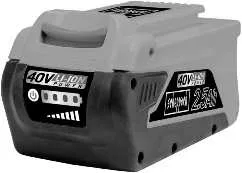


Layout (Fig. 1)
DEAR CUSTOMER, We hope your new tool brings you much enjoyment and success.
m Important! The equipment and packaging material are not toys. Do not let children play with plastic bags, foils or small parts. There is a danger of swal- lowing or suffocating!
We recommend: Read through the complete text in the operating in- structions before installing and commissioning the device. The operating instructions are intended to help the user to become familiar with the machine and take advantage of its application possibilities in accordance with the recommendations. The operat- ing instructions contain important information on how to operate the machine safely, professionally and economically, how to avoid danger, costly repairs, re- duce downtimes and how to increase reliability and service life of the machine. In addition to the safety regulations in the operating instructions, you have to meet the applicable regula- tions that apply for the operation of the machine in your country. Keep the operating instructions pack- age with the machine at all times and store it in a plastic cover to protect it from dirt and moisture. Read the instruction manual each time before op- erating the machine and carefully follow its informa- tion. The machine can only be operated by persons who were instructed concerning the operation of the machine and who are informed about the associated dangers. The minimum age requirement must be complied with. In addition to the safety instructions in this operating manual and the separate regulations of your country, the generally recognised technical rules for operat- ing woodworking machines must also be observed.

The equivalent lithium content of the batteries includ- ed in the product package is below the appropriate limit values. Therefore the battery as an individual component as well as the power tool and its product package are not subject to national or international dangerous goods regulations. If several machines with lithium ion batteries are transported, these regulations may become relevant and special safety measures may be required (e.g. for the packaging). In this case find out about the currently valid regulations for the country of use.
Please note that our equipment has not been de- signed for use in commercial, trade or industrial appli- cations. Our warranty will be voided if the equipment is used in commercial, trade or industrial businesses or for equivalent purposes.
m CAUTION! Do not post batteries which have a damaged casing.
m CAUTION! Returns only possible in the original box.
The equipment is supplied in packaging to prevent it from being damaged in transit. The raw materials in this packaging can be reused or recycled. The equip- ment and its accessories are made of various types of material, such as metal and plastic. Defective components must be disposed of as special waste. Ask your dealer or your local council.
Battery state of charge • Press the button to check the state of charge at the state of charge indicator LED.
The indicator goes out after 5 seconds. If the LED flashes, the battery must be recharged. If the LED not lights up after the button is pressed, the battery is faulty and must be replaced.
Disposal information m WARNING! Do not throw accumulators/batteries into the house- hold waste, fire or water. Do not open disused bat- teries. Accumulators/batteries should be collected, recycled or disposed of in an environmentally friendly manner.
Old devices must not be disposed of with house- hold waste!
This symbol indicates that this product must not be disposed of together with domestic waste in compliance with the Directive (2012/19/EU) pertaining to waste electrical and electronic equipment (WEEE). This product must be disposed of at a designated collection point. This can occur, for example, by handing it in at an author- ised collecting point for the recycling of waste elec- trical and electronic equipment.
Battery and charger heat up during the charging pro- cess. This is perfectly normal! Lithium ion batteries do not exhibit the well known “memory effect”. Nev- ertheless, before a battery is recharged, it should be fully discharged and the charging process always run to the end.

Improper handling of waste equipment may have negative consequences for the environment and hu- man health due to potentially hazardous substances that are often contained in electrical and electronic equipment. By properly disposing of this product, you are also contributing to the effective use of natu- ral resources. You can obtain information on collec- tion points for waste equipment from your municipal administration, public waste disposal authority, an authorised body for the disposal of waste electri- cal and electronic equipment or your waste disposal company.
Batteries and rechargeable batteries do not be- long in the household waste!
As the consumer you are required by law to bring all batteries and rechargeable batteries, regardless whether they contain harmful sub- stances* or not, to a collection point run by the local authority or to a retailer, so that they can be disposed of in an environmentally friendly manner. *labelled with: Cd = cadmium, Hg = mercury, Pb = lead • Remove the batteries from the laser before dispos- ing of the machine and the batteries.
Besitzer und unser Team antworten in der Regel innerhalb eines Tages – und Ihre Frage hilft auch anderen weiter.
Stellen Sie die erste Frage — andere Nutzer oder unser Team antworten Ihnen.